
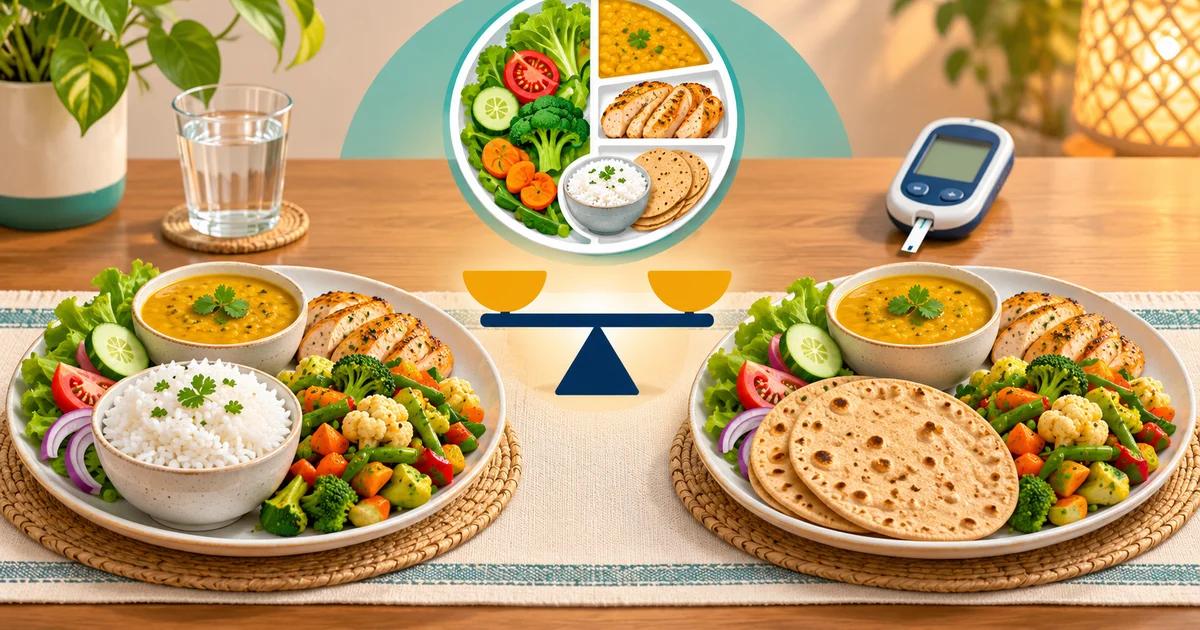
“Do I have to give up rice?” is one of the first questions many Indian families ask after a diabetes diagnosis. Another common assumption is that roti can be eaten freely. Both rice and roti contain carbohydrate. The amount you eat and the rest of your meal matter more than a simple good-food/bad-food label.
Is roti always better than rice?
Whole-wheat roti can contribute fibre, but size and number make a considerable difference. A large bowl of rice and several large rotis can both make a meal carbohydrate-heavy. A paratha with extra oil or ghee also adds energy that is easy to overlook.
A small North Indian study compared rice-based and wheat-chapatti mixed meals containing equal available carbohydrate. It found no significant difference in their glycaemic index. However, it involved only ten healthy adults and one meal combination; it does not prove that every rice and roti meal behaves identically in people with diabetes. Read the study.
Rice variety, flour, processing, cooking, portion size and your body's response all affect the result.
Build the whole plate first
One practical starting point is a roughly 9-inch plate:
- Half: non-starchy vegetables, such as leafy greens, bottle gourd, okra, cauliflower, beans or salad.
- One quarter: protein foods, such as dal, chickpeas, rajma, tofu, paneer, eggs, fish or lean chicken.
- One quarter: a measured serving of rice, roti, daliya or another carbohydrate food.
Dal and beans also contain carbohydrate, alongside protein and fibre. The plate method is a guide, not an exact prescription. Your meal plan should account for medicines, activity, weight, appetite and other health conditions. NIDDK explains meal planning with diabetes.
If you prefer rice
Use the same small bowl or measuring cup so portions remain consistent. Serve vegetables and protein alongside it rather than eating a large rice-only meal. Brown or less-polished rice may offer more fibre, but it is not unlimited. Adding juice, a sweet drink or dessert can increase the total carbohydrate substantially.
There is no need to purchase expensive “diabetic rice” before understanding your usual portions. A sustainable plan should work with familiar food, your budget and what the family cooks.
If you prefer roti
Count size as well as number. Small, thin whole-wheat rotis make comparison easier than large restaurant rotis. Refined-flour breads, oil-rich parathas and generous ghee toppings are different choices from a plain roti.
Look at the accompanying sabzi too: potatoes add starch, and generous oil adds energy. Whole grains generally provide more fibre than refined grains, but total carbohydrate still matters. CDC's carbohydrate guide explains these distinctions.
How much rice or how many rotis?
There is no safe universal number. A small bowl of cooked rice or one to two small rotis may illustrate a starting portion for some adults; these amounts are not equivalent for every bowl, flour or roti, and are not a prescription.
Needs change with pregnancy, kidney disease, age, body size, physical work and insulin use. The Diabetes Diet Planner can help structure meals, while an individual consultation can address these differences.
Learn from your glucose pattern
If your clinician recommends home testing, record what you ate, the portion and the reading at the agreed time—often about two hours after starting a meal. A single high result does not establish that a staple must be banned. Infection, stress, sleep, activity and medicine timing also matter. HbA1c provides a longer-term view.
Do not abruptly cut meals or carbohydrate while continuing the same insulin or sulfonylurea dose: low glucose may follow. Very restrictive or ketogenic diets need a medication review, particularly with SGLT2 inhibitors. Bring your usual meals, glucose log and medicine list to the Diabetes Clinic. If weight loss is a goal, read about type 2 diabetes remission.
Common questions
Can I eat fruit instead of rice?
Whole fruit can fit a meal plan, but it also supplies carbohydrate. Juice is easy to drink in large amounts and is not an everyday substitute for a balanced meal.
Should the whole family eat differently?
A shared meal with vegetables, protein and appropriately sized staple portions is often easier to maintain than separate “patient food.” Individual portions and medical needs still differ.
This guide supports health education. Do not change insulin, medicines or a prescribed diet without individual advice.
This article is for health education and does not replace an individual medical consultation. Symptoms, test results, medicines, and treatment decisions should be discussed with a qualified clinician.
Seek urgent medical care for severe breathing difficulty, chest pain, confusion, fainting, uncontrolled bleeding, severe dehydration, or rapidly worsening symptoms.