
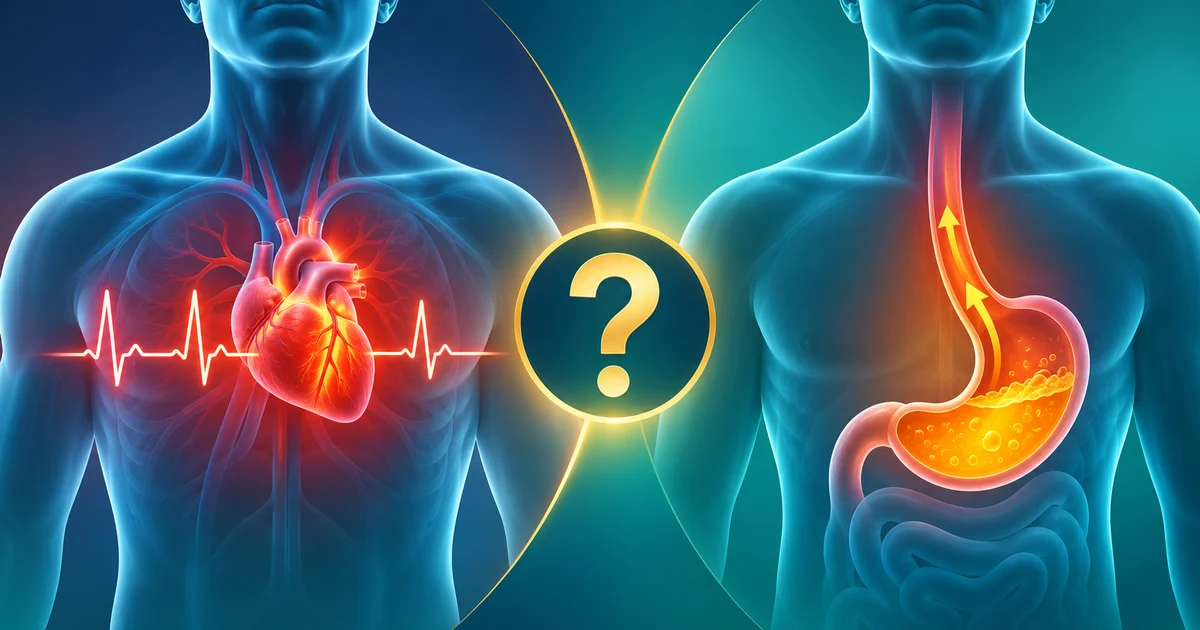
“It must be gas” is a common reaction to burning or heaviness in the chest. Acid reflux is one possible cause, but a heart attack can also feel like indigestion or upper abdominal discomfort. There is no dependable home checklist that rules out a heart emergency.
If you currently have new chest pressure, breathlessness, cold sweat, faintness or discomfort spreading to the arm, jaw or back, seek emergency medical help immediately. Do not wait for a clinic appointment or a WhatsApp reply. Do not drive yourself.
What might a heart attack feel like?
The discomfort may be heaviness, squeezing, tightness or pain in the middle of the chest. It can persist for several minutes or disappear and return. Some people notice discomfort in an arm, shoulder, back, neck, jaw or upper abdomen instead.
Shortness of breath, nausea, unusual weakness, lightheadedness or a cold sweat can accompany the discomfort. Breathlessness can occur without obvious chest pain. A heart attack does not always begin with dramatic, severe pain. Women, older adults and people with diabetes may have less familiar symptoms, although chest discomfort remains common. American Heart Association warning signs.
What points towards acidity or reflux?
Reflux happens when stomach contents flow back into the food pipe. Burning after meals, a sour taste, regurgitation, and symptoms after lying down or bending can suggest it. Large meals and eating close to bedtime may contribute.
However, the location and sensation can overlap with heart-related discomfort. A person can also have reflux and heart disease at the same time. Do not assume that an established history of acidity explains every new episode. Read the acidity, GERD and H. pylori guide for ongoing digestive symptoms. American Heart Association: heartburn or heart attack.
Four shortcuts that can be misleading
“I burped, so it cannot be my heart”
Burping or nausea does not establish the cause of chest discomfort. Describe the whole episode, including what brought it on and any breathlessness or sweating.
“The antacid helped, so I am safe”
Symptoms can improve spontaneously, and improvement after a medicine does not reliably identify their cause. Do not repeatedly try remedies while warning signs continue.
“The pain is mild”
Pain severity alone does not measure danger. New, unexplained discomfort deserves attention even when you can still walk or talk.
“My first ECG was normal”
The first ECG is only one part of an assessment. The doctor considers symptom timing, examination, repeat ECGs and blood tests such as troponin. Some tests need repeating over time. A home pulse reading, smartwatch or normal oxygen reading cannot replace this evaluation. American Heart Association: diagnosing a heart attack, NICE chest pain recommendations.
Who should be especially alert?
Tell the clinician about diabetes, high BP, cholesterol problems, smoking or other tobacco use, kidney disease, previous heart disease or stroke, and a family history of early heart disease. Age and physical inactivity are also relevant. Having none of these factors does not make a heart attack impossible.
For a non-emergency review, bring your prescriptions, previous ECGs and relevant reports. Note when the discomfort started, how long it lasted, whether activity triggered it, and whether it spread elsewhere. Do not delay urgent care to collect these documents.
What should you do during a suspected emergency?
Stop exertion, sit down and arrange emergency medical help. Ask someone to stay with you if possible. Use an ambulance or another person's help rather than driving yourself. Tell the emergency team about medicines, allergies and bleeding problems.
Do not take someone else's heart medicine. Follow the emergency professional's advice about aspirin; it is unsuitable for some people, and seeking help must come first. American Heart Association: aspirin during a suspected heart attack.
Even when pain settles, a new pattern brought on by walking or climbing stairs, recurring episodes, or associated breathlessness needs prompt assessment. Worsening symptoms or pain at rest should be treated as urgent.
For stable, non-emergency concerns, the general physician clinic in Patna can review symptoms and cardiovascular risks. Active warning signs belong in an emergency department.
Common questions
Can gas and a heart attack feel similar?
Yes. That overlap is why uncertain, new chest symptoms should be assessed rather than labelled at home.
Can a normal ECG reassure me completely?
No. Follow the clinician's advice about repeat testing and what to do if symptoms return.
Should I wait for a routine appointment?
Not if warning signs are present. Seek emergency care immediately.
This guide supports patient education and cannot diagnose the cause of chest pain remotely.
This article is for health education and does not replace an individual medical consultation. Symptoms, test results, medicines, and treatment decisions should be discussed with a qualified clinician.
Seek urgent medical care for severe breathing difficulty, chest pain, confusion, fainting, uncontrolled bleeding, severe dehydration, or rapidly worsening symptoms.