
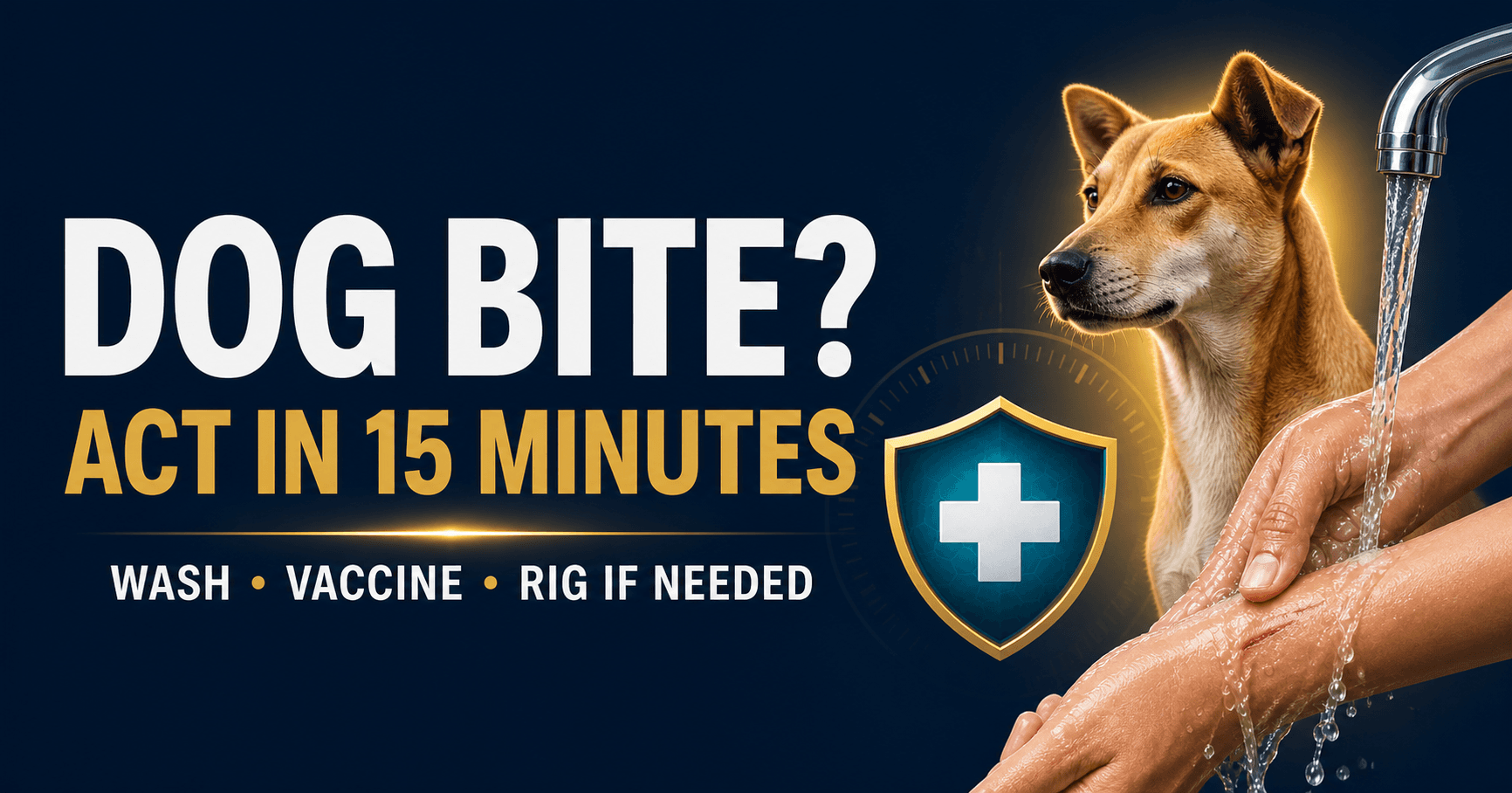
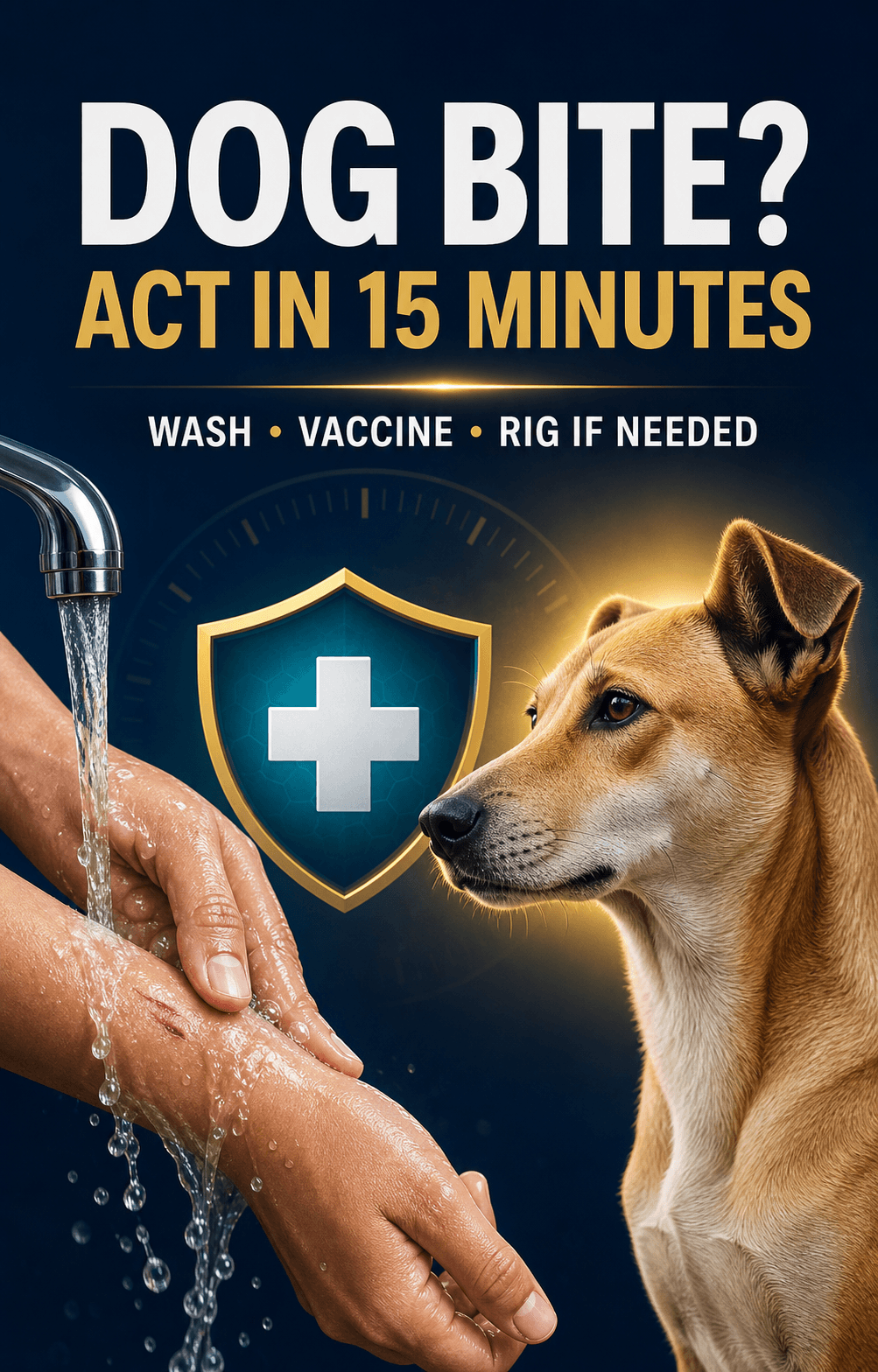
A dog bite may look small, but it should never be ignored. Even a minor scratch can be a rabies exposure. Rabies can be prevented when the wound is treated correctly and post-exposure prophylaxis (PEP) is started in time.
Do not wait for symptoms of rabies. Seek prompt medical care after a possible exposure.
Rabies prevention in 6 simple slides
1 / 6
आगे या पीछे जाने के लिए तीर दबाएं। मोबाइल पर चित्र को दाएं-बाएं भी खिसका सकते हैं।
What should you do immediately after a dog bite?
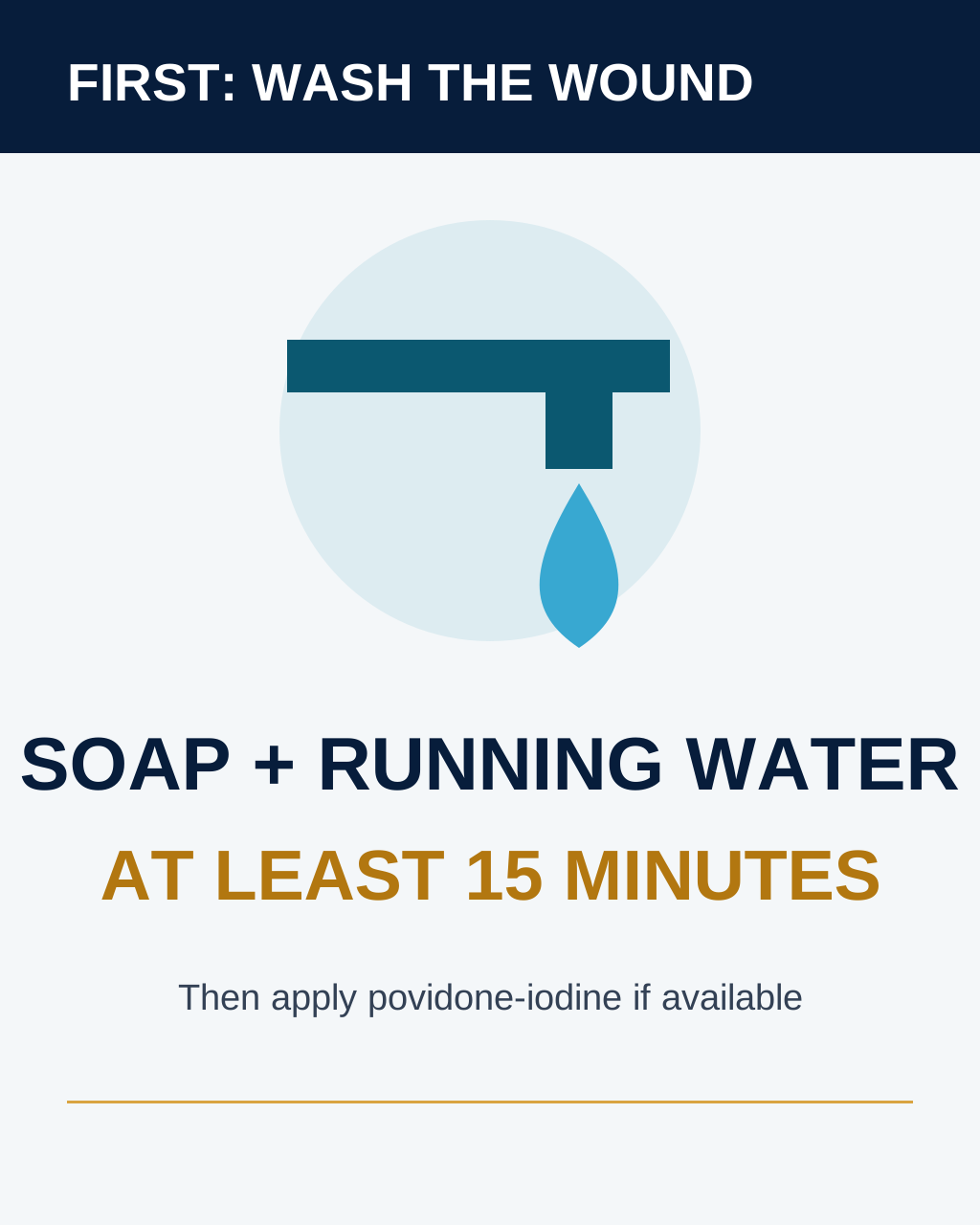
Wash and flush the wound with soap and plenty of running water for at least 15 minutes. After washing, povidone-iodine or another appropriate antiseptic may be applied if available. Then see a doctor promptly.
A clinician will assess whether the skin was broken, whether bleeding occurred, the number and location of wounds, the animal involved, whether it can be observed, your previous vaccination history, and whether vaccine and/or RIG is required.
What should you not put on the wound?
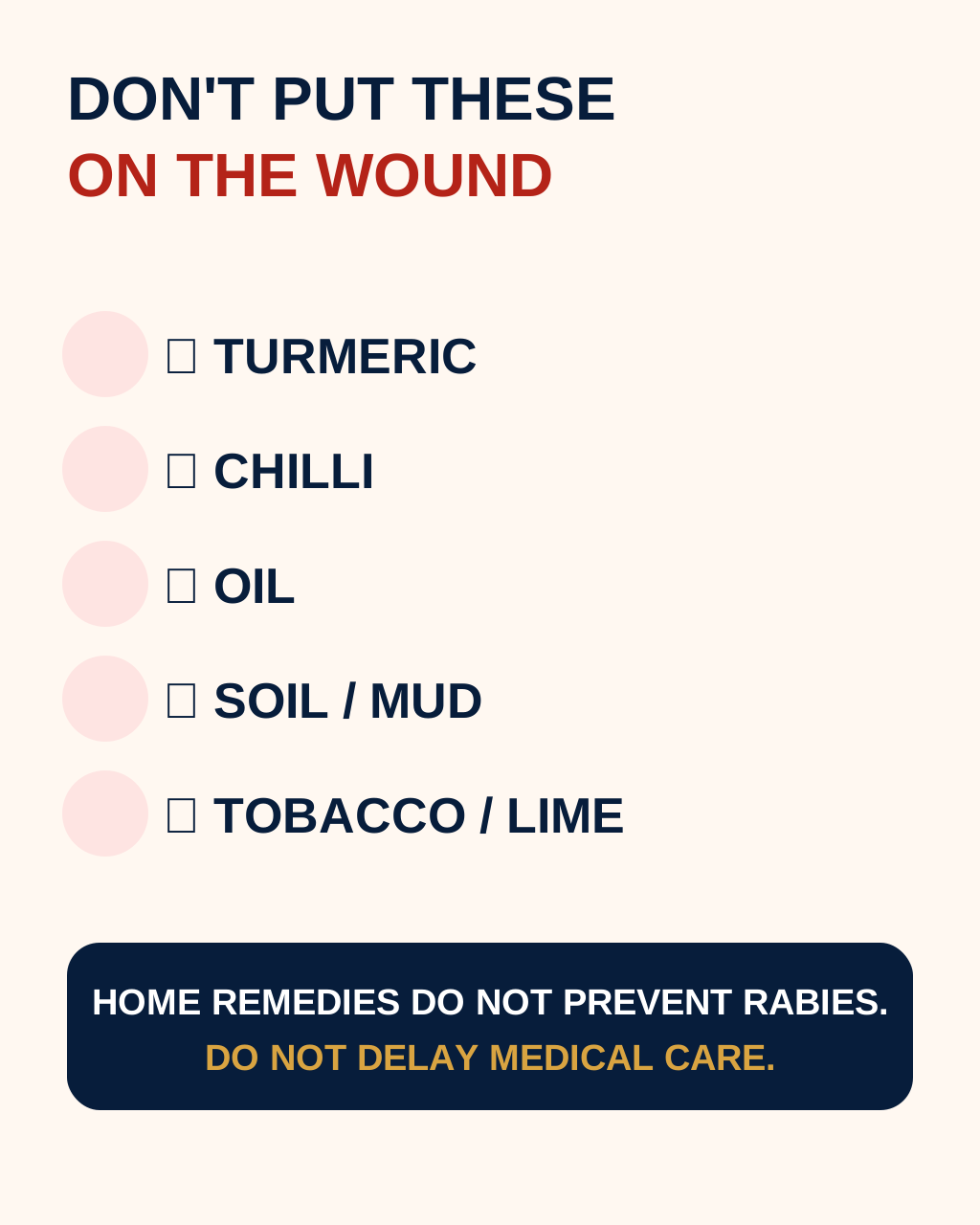
Do not apply chilli, turmeric, oil, soil, mud, tobacco, lime or herbal pastes. Do not tightly bandage the wound unless medically advised. Home remedies do not prevent rabies and must not delay medical assessment.
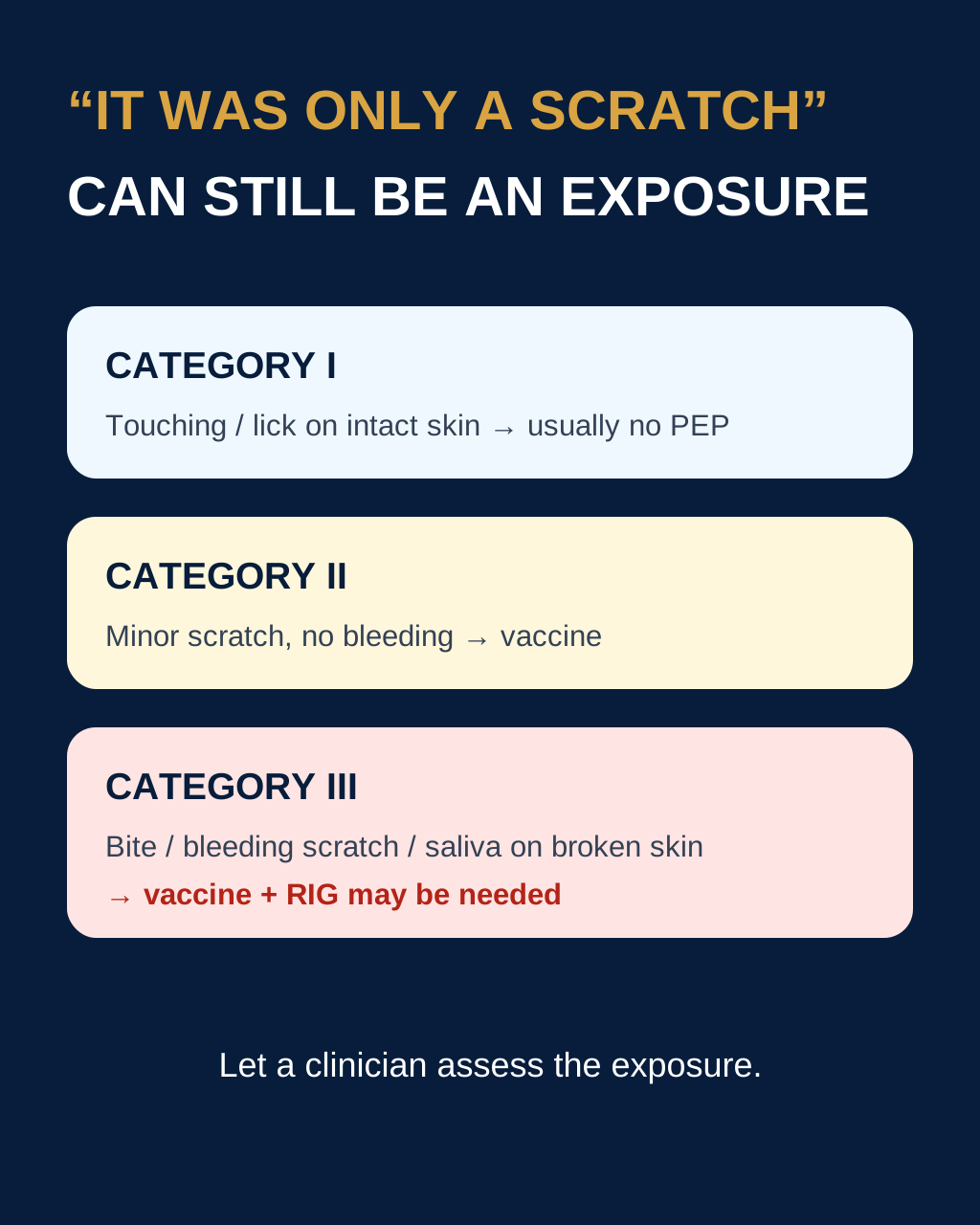
Does a dog scratch also require rabies vaccine?
The decision depends on the exposure, not whether you call it a bite or scratch.
- Category I: touching or feeding the animal, or a lick on completely intact skin—generally no PEP when the history is reliable.
- Category II: minor scratches or abrasions without bleeding—rabies vaccination is generally required.
- Category III: bites that penetrate skin, bleeding scratches, saliva on broken skin, or saliva in the eyes or mouth—urgent assessment is required. A person not previously vaccinated may need rabies vaccine plus Rabies Immunoglobulin (RIG).
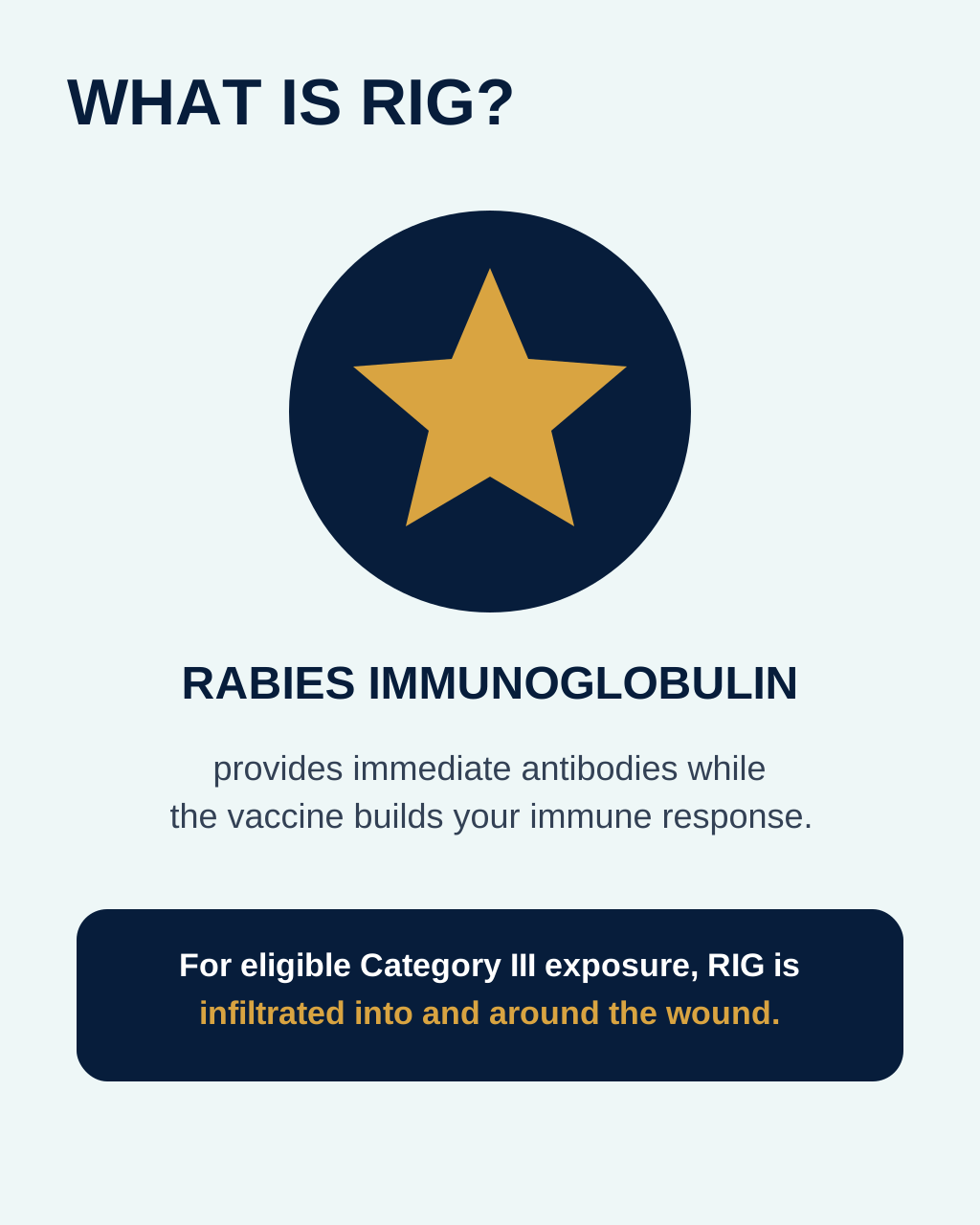
What is Rabies Immunoglobulin (RIG)?
RIG provides immediate passive antibodies while the vaccine helps the body develop its own immune response. For eligible Category III exposure, as much of the calculated dose as anatomically possible is infiltrated into and around the wound according to medical protocol. If there is a deep bite, multiple bites or a bleeding scratch, ask whether RIG is required.
Rabies vaccine schedule after a dog bite in India
For a person who has not previously been vaccinated, India's National Rabies Control Programme lists:
- Intramuscular (IM): Day 0, 3, 7, 14 and 28.
- Intradermal (ID): Day 0, 3, 7 and 28.
Day 0 is the day the first dose is given. The route and schedule should be selected and administered by trained healthcare staff. If a dose is delayed, do not abandon or restart the course yourself—contact the treating clinic.
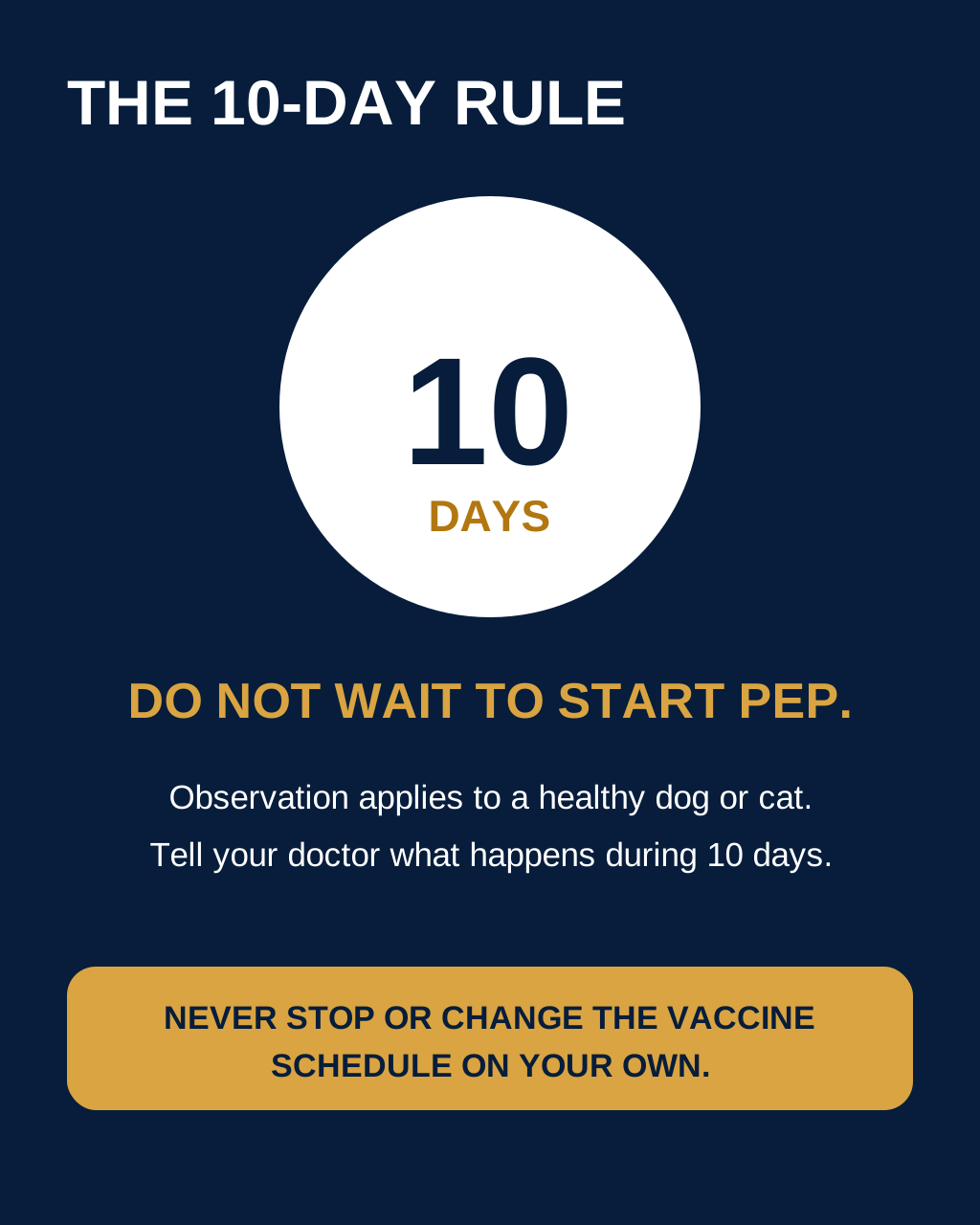
Should you wait 10 days before taking the vaccine?
No. When PEP is indicated, it should start promptly. A healthy dog or cat may be observed for 10 days, but observation is not a reason to postpone treatment. The rule applies specifically to dogs and cats, not to every animal.
If the animal remains alive and completely healthy, tell the treating doctor or anti-rabies clinic. Do not stop or change the schedule on your own. Seek urgent advice if the animal becomes ill, behaves abnormally, dies or disappears.
Does a pet dog bite need medical assessment?
Yes. The doctor considers the reliability of the animal's vaccination record, its current health, whether it can be observed, the nature of the wound and local rabies risk. “It is our own dog” is not enough to dismiss an exposure.
Which bites need especially urgent attention?
Bites on the face, head, neck, hands or fingers; multiple or deep wounds; severe tissue injury; and exposures in young children deserve particular urgency. Children may not report a small bite or scratch, so inspect them carefully after suspected animal contact.
What if the bite happened several days ago?
Do not assume it is too late. If a significant exposure occurred and appropriate PEP was not given, seek medical assessment as soon as possible.
If I had rabies vaccine before, do I need it again?
Previous vaccination changes management. Tell the doctor when you were vaccinated, how many doses you received and whether the course was completed. Bring records if possible. Previously vaccinated people generally follow a different, shorter regimen and are not managed like unvaccinated patients.
Tetanus, antibiotics and wound care
The doctor may also assess tetanus protection, bacterial-infection risk, antibiotics, wound cleaning or debridement, and surgical care. Antibiotics do not prevent rabies and cannot replace vaccine or RIG when indicated.
Four golden rules
- Wash: soap and running water for at least 15 minutes.
- No home remedies: do not apply chilli, turmeric, oil, soil or tobacco.
- Start PEP on time: do not wait 10 days before seeking care.
- Ask about RIG: especially after Category III or severe exposure.
Frequently asked questions
Does a scratch without bleeding need vaccine?
It can be Category II exposure, for which vaccination is generally recommended. Get assessed promptly.
Can I stop vaccination if the dog is healthy after 10 days?
Do not alter the schedule yourself. Report the animal's status and follow the treating doctor's advice.
Does every dog bite need RIG?
No. RIG is mainly used for appropriate Category III exposures in people not previously appropriately vaccinated.
Can a vaccinated pet dog transmit rabies?
Vaccination greatly reduces risk, but a potentially significant exposure should still be assessed rather than ignored.
Rabies is preventable—do not delay
Wash for 15 minutes → seek medical care → take vaccine if indicated → receive RIG when indicated → complete the advised course.
Learn about Dr Pratyush Kumar's general physician services, book an appointment, or contact the clinic.
Trusted sources
This article is for health education and does not replace an individual medical consultation. Symptoms, test results, medicines, and treatment decisions should be discussed with a qualified clinician.
Seek urgent medical care for severe breathing difficulty, chest pain, confusion, fainting, uncontrolled bleeding, severe dehydration, or rapidly worsening symptoms.